Midwest Hard Tech Newsletter
Hardware is Hard - Lets build it together in the Midwest!


Welcome to the Midwest Hardtech Newsletter - Vol 00
The views expressed are solely my own and do not necessarily reflect those of my current employer.
Introduction to Hardware
Hardware. What exactly is it? Why is it important? Why is it hard?
Since the dawn of modern engineering, there have been hardware builders. I live and work in the Midwest — a region deeply rooted in manufacturing excellence. With its central location, established logistics networks, mild climate, and skilled labor pool, it’s an ideal place to explore how we can accelerate hardware innovation — particularly in Columbus, Ohio.
This post kicks off a series chronicling my journey to build hardware faster, smarter, and closer to the customer.
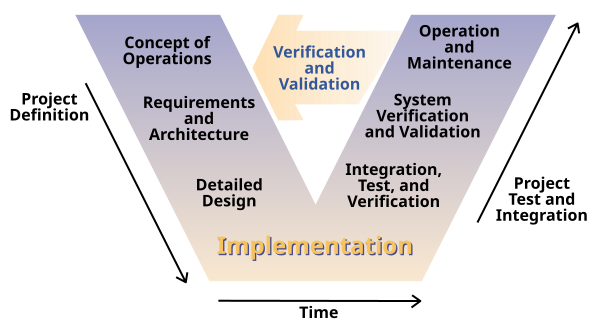
The V-Model of HW/SW Development
Developed independently in both the U.S. and Germany in the late 1980s, the V-Model brought structure and predictability to complex engineering projects. It’s still widely used today in high-stakes industries like:
Aerospace
Automotive
Medical devices
Because it helps teams:
✅ Reduce project risks
✅ Improve quality and traceability
✅ Control costs
✅ Clarify communication
But it has one major flaw: rigidity.
Agile Hardware Development
Modern hardware should follow the principles of:
Fail fast. Fail cheap. Learn quickly.
While safety-critical systems may still demand rigorous, sequential processes, most hardware today can — and should — be developed with more agility.
The biggest barrier? Separation of hardware and software.
The truth is:
Hardware and software must be developed in tandem.
That requires integrated planning, continuous validation, and built-in feedback.
The traditional V-Model assumes a linear, one-step-at-a-time approach. But real-world projects are messy. Requirements shift. Assumptions break. Rigid processes don’t adapt well.
Real hardware planning requires deep domain knowledge and hands-on experience — and no amount of theoretical modeling replaces that.
Comparing Software and Hardware Time Frames
🖥️ Software: 2-week to 1-month sprints
🔩 Hardware: 1 to 2 years — sometimes more
But this gap is shrinking. Thanks to:
3D printing
Digital twins
Better simulation tools
Modular platforms
Rapid prototyping
We can now build physical systems with far more speed and agility.
It’s time to move beyond “build it and they will come.” Instead, ask:
What does the customer actually need — and how can we get there faster, with less waste?
My Mission: Building an Ideal Lean Hardware Flow
This series will explore how to reshape hardware development around Lean and Agile principles:
🔍 Where traditional hardware development breaks down
⚙️ How Agile and Lean can be adapted for hardware
⏱️ How to iterate faster without compromising quality
🏭 Real tools and examples from Midwest manufacturing
Let’s Build Better — Together
This isn’t just a technical exercise — it’s a mindset shift in how we build physical products, from mechanical systems to embedded devices.
If you're a maker, builder, engineer, or founder looking to rethink hardware — especially here in the Midwest — I’d love for you to follow along. And if you want to be featured, reach out!
👉 Subscribe here on Substack for future posts
🌐 Or visit mllelectronics.com — where I offer rapid prototyping and Hardtech consulting services
Let’s build hardware that’s faster, smarter, and closer to the customer.